EDITORIAL

The article presents the results of the VI All-Russian Congress with International Participation “5P Children’s Medicine”. This event has made a significant contribution to the development of Russian pediatric medicine by sharing best pediatric practices and highlighting new achievements in fundamental and applied pediatrics.
ORIGINAL ARTICLES
Background. Cytological examination of nasal mucus (rhinocytogram) is a non-invasive and cost-effective diagnostic method which can be used by pediatricians, infectious disease specialists, otolaryngologists, and allergists-immunologists to clarify the diagnosis in patients with prolonged nasal congestion. Herein, we report nasal cytology data in children without a confirmed diagnosis.
Objective. To assess the frequency of occurrence of various cytological changes in rhinocytogram data in children referred to an allergist/immunologist to clarify the cause of prolonged nasal congestion.
Patients and methods. We analyzed the results of rhinocytogram in 344 patients aged 2–18 years with long-term nasal congestion (more than two weeks), referred by doctors for consultation with an allergist/immunologist in the period from October 1, 2022 to June 30, 2023. All patients were examined on an outpatient basis at Children’s City Clinic No. 94 in Moscow (Russia).
Results. According to the rhinocytogram data, 56.6% of children showed changes in the cytological profile of the type of infectious rhinitis. This included an increase in inflammatory cells — neutrophils, lymphocytes, neutrophils — from a moderate amount to covering the entire field of view with a normal level of eosinophils. In 10.6% of patients, mixed rhinitis was detected, with an increased level of inflammatory cells in combination with hypereosinophilia more than 15% in the visual field. In 28.4%, no significant changes were detected. In 4.4% of patients, it was not possible to obtain sufficient material to study the sample.
Conclusions. In children who contacted an allergist/immunologist due to prolonged rhinitis, the rhinocytogram data most frequently revealed an infectious etiology. Cytological examination of nasal mucus is an accessible and informative method for differential diagnosis in cases of prolonged rhinitis in children.
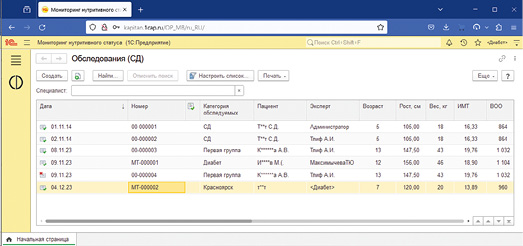
In this article, we present the first experience of developing a software program in Russia for calculating the diet and insulin dose for patients with type 1 diabetes mellitus. The software includes a central database for medical specialists and a smartphone application for patients and their guardians. Calculations are performed using parameters individual to each patient: target glycemia, insulin sensitivity factor, carbohydrate coefficient, food intake at a certain period of day. The competitive advantage, compared to foreign analogues, consists in the possibility of calculating the amount of active insulin. The database contains data on the chemical composition of more than 2500 products. The smartphone application is being tested in the Endocrinology Department of the Scientific Research Institute of Childhood of the Ministry of Health of Moscow Oblast with the participation of young patients and their guardians. For the “doctor–patient” interaction, the possibility of data exchange in the mode of telemedicine technologies is ensured.
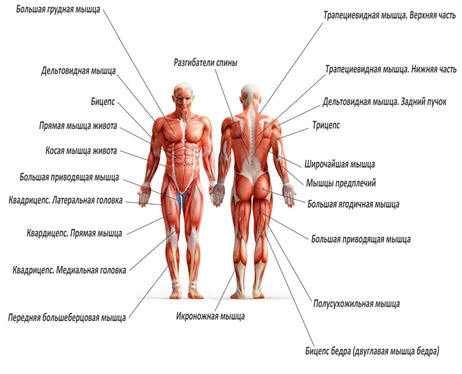
Postural disorders are associated with the risk of osteochondrosis and disruption of internal organs functioning. At an early age, a child may develop a deformed chest resulting in problems with breathing and blood circulation.
Functional disorders of posture may lead to changes in the anatomical curves of the spine, which in turn leads to uneven distribution of the load on the spinal column. An integrated approach based on myofascial massage techniques in the rehabilitation of children with poor posture allows optimal results to be achieved. The specialist performs a set of actions using various myofascial techniques. After preparing the child’s muscles, fascia, and skin, the specialist performs active mobilization techniques to restore the tension of the myofascial structures, thereby improving the mobility of soft tissues and increasing mobility in the spine.
The presented method was created, tested, and implemented at the National Medical Research Center for Children’s Health (Russia). During the procedure, the symmetrical tension of the myofascial chains was gradually restored, which in turn restored the functional relationships between the myofascial structure of all layers. The effectiveness of myofascial and mobilization techniques is assessed based on the restoration of the symmetry of myofascial structures, which minimizes the development of functional disorders in the spine. The results obtained demonstrate the effectiveness of myofascial massage techniques in the rehabilitation of children with functional postural disorders. Based on the results of the study, a positive effect of this method was revealed in the form of improving the quality of life of children.
Objectives. To analyze the dynamics of the emotional and personal sphere of adolescents as a predictor for the formation of the dominant type of interpersonal relationships.
Materials and methods. The study involved 31 adolescents, including 16 boys and 15 girls aged 12.8 ± 0.37 year. The following diagnostic methods were used: a questionnaire for children’s depression (M. Kovacs), a test of emotional intelligence (D.V. Lyusin), the method “hierarchical structure of fears” (Yu.V. Shcherbatykh, E.I. Ivleva), and the test “diagnostics of interpersonal relationships” (T. Leary).
Results. Significant relationships between the characteristics of the emotional and personal sphere and the dominant type of interpersonal relationships were obtained. This confirms that adolescents with an aggressive type of interpersonal relationships are more maladaptive. Adolescents are particularly sensitive to the emergence of symptoms of emotional instability, with the parameters of emotional competence and self-esteem being inversely proportional to emotional symptoms and conflict relationships with peers. The conducted psychological correctional work led to a positive dynamics in the context of reducing depressive symptoms and increasing interpersonal emotional intelligence.
Conclusion. Various types of interpersonal relationships of adolescents, features of emotional intelligence and fears in adolescence were studied. The corresponding psychological correctional work was carried out.
NEUROLOGY
Hurler syndrome is the most severe form of mucopolysaccharidosis type I (MPS I). This is a metabolic genetic disorder caused by mutations in the IDUA gene, which encodes the α-L-iduronidase enzyme. Despite its rarity, timely diagnosis is critical. Current treatments for MPS I include enzyme replacement therapy (ERT) and allogeneic hematopoietic stem cell transplantation (HSCT). Intravenous ERT, such as laronidase, although being widely used, exhibits limited effectiveness due to its inability to cross the blood–brain barrier, thus failing to halt neurological deterioration. HSCT remains the gold standard, particularly when performed before age 2, prior to developing severe clinical manifestations. Early HSCT allows better preservation of cognitive functions and mitigation of somatic symptoms, although carrying risks of complications and not guaranteeing complete recovery. These limitations underscore the need for innovative strategies, including improved early screening methods and genetic engineering technologies. Gene therapy (GT) is a promising approach, having the potential for sustained enzyme production to address the underlying deficiency.
Narcolepsy is a severe chronic disease characterized by disorders of sleep and wakefulness centers, with a predominant violation of the REM sleep phase. Until the end of the 20th century, narcolepsy had been considered as a complex clinical and neurophysiological phenomenon with an unclear etiology, affecting almost all areas of regulation of the sleep/wake cycle. Over the past decades, the advancement of imaging and instrumental diagnostics methods has improved our knowledge of the etiology, pathogenesis, and clinical pattern of this condition. Currently, two major types of the disease are distinguished. In children’s practice, type 1 (NT1) is more common. This type is characterized by excessive daytime sleepiness, cataplexy, sleep paralysis, as well as the appearance of hallucinations and fragmentation of night sleep. Recent years have seen an increase in cases of this pathology, largely due to an improved awareness of physicians about the disease. Children diagnosed with type 1 narcolepsy exhibit a peculiar cataplexy phenotype characterized by persistent hypotension with marked changes in facial expression (cataplectic emotions) and a complex mosaic of hyperkinetic movements that are amplified during emotional exertion. These features gradually disappear as the disease progresses, leading to a typical cataplexy pattern. Children with such a diagnosis also show behavioral abnormalities and mental disorders, hyperactive/aggressive behavior, up to psychotic features. Researchers also note that type 1 narcolepsy, which occurs in children during the prepubertal period, is associated with obesity and premature sexual development, which may reflect a hypothalamic disorder secondary to a decrease in the level of the neurotransmitter hypocretin. The complexity of the phenotype of pediatric NT1 requires an interdisciplinary assessment and selection of therapy, taking the behavioral and endocrinological characteristics of the growing organism into account. The presented review article discusses the clinical pattern, diagnosis and treatment of this pathology in children’s practice.
CLINICAL CASE
Background. Pulmonary embolism (PE) is characterized by an acute alteration of central hemodynamic parameters in the systemic and pulmonary circulation, representing a common life-threatening condition among adult patients. Although Josef von Löschner first described PE in 1861, there remains a lack of knowledge of this complication in pediatric practice. This gap is related not only to a lack of systematic knowledge about the prevalence of PE in the pediatric population, but also to the vagueness and sometimes atypical nature of its clinical presentation, unlike in adult patients. Misinterpretation of existing symptoms and incorrect interpretation of instrumental examination data inevitably lead to incorrect diagnoses of pneumonia, heart failure, or the onset of cancer, which explains the high mortality rate of PE in children.
Objective. To demonstrate cases of pulmonary embolism (PE) in the presence of significant risk factors — oral contraceptive use and decreased levels of proteins C and S — in two adolescent girls.
Materials and methods. We present two cases of clinically and/ or instrumentally confirmed episodes of PE in adolescent female patients aged 17 and 14 years. The BMI was 25.9 and 25.15 kg/m², respectively. Instrumental examinations included ECG, transthoracic echocardiography, and contrast-enhanced MSCT. Laboratory testing for antiphospholipid syndrome and thrombophilia testing were mandatory additions to clinical and biochemical blood tests, as well as a coagulogram with determination of ATIII and D-dimer levels.
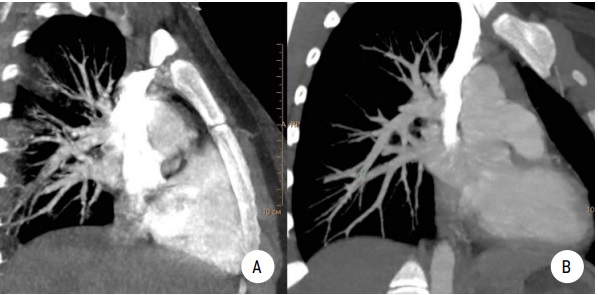
Results. Clinical symptoms of diagnostic value at the onset of the disease included shortness of breath, chest pain, cough, and hemoptysis. In neither case did the PE episode result in an increase in pulmonary artery pressure, as evidenced by right ventricular pressure readings of 24 and 20 mmHg, respectively. Contrast-enhanced CT confirmed the diagnosis of submassive PE and signs of infarction pneumonia in both cases. Doppler ultrasound did not detect a source of PE in the vessels of the lower extremities or pelvis in either patient. Oral contraceptive use in one case and decreased protein C and S levels in the other were significant factors in the development of PE. The respective treatment consisted of low-molecular-weight heparins (LMWH) followed by indirect anticoagulants: apixaban and warfarin, respectively. A one-month follow-up MSCT showed improvement in the disease but not complete restoration of the lung airflow. Indirect anticoagulant therapy was continued.
Conclusion. The incidence of pulmonary embolism in children is lower than in adults, which this does not diminish the significance of this serious complication in pediatric practice. Central venous catheters, septic complications, prolonged immobilization, shunted hydrocephalus, cancer, and obesity are the most likely causes of PE in children, similar to adults. Oral contraceptive use and hereditary thrombophilia in two of our cases suggest other equally obvious causes of PE in adolescents.
PEDIATRIC SURGERY
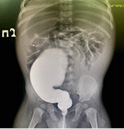
Objective. To present clinical cases of cystic formations of the sacrococcygeal region in children. This is a rather complex and relatively rare pathology, which is diagnosed at different periods of childhood and requires surgical intervention.
Materials and methods. An examination and surgical treatment of children diagnosed with cystic formation of the sacrococcygeal region was conducted at the Department of General and Planned Surgery of the Research Institute of Pediatric Surgery, Children’s Health Research Center of the Ministry of Health of the Russian Federation. All children underwent surgical treatment.
Results. Three clinical cases of sacrococcygeal pathology in children are described. The complexity of clinical and instrumental diagnosis is discussed. The details of surgical interventions are outlined. Positive long-term results are noted. The described experience in the diagnosis and surgical treatment of sacrococcygeal cystic formations in children presents interest to pediatric surgeons, pediatricians, oncologists, and neonatologists.
Conclusion. Presacral cystic formations should be detected and operated on in a timely manner. Children who underwent sacrococcygeal teratoma removal during the newborn period require mandatory follow-up in the long-term postoperative period, with ultrasound monitoring and MRI of the sacrococcygeal region, as well as oncological supervision. Treatment of recurrent teratomas of the sacrococcygeal region, as well as cystic formations of unknown etiology, in children is associated with the risk of damage to the rectum and other organs, and the pelvic diaphragm, which requires careful preoperative planning.

ISSN 3033-6783 (Online)