
EDITORIAL

Background. Peutz–Jeghers syndrome in children is frequently complicated by small-bowel intussusception and obstruction, resulting in repeated operations and bowel resections.
Aim. To evaluate a stepwise management algorithm designed to reduce bowel resections through regular surveillance, prioritization of endoscopic treatment, and mandatory post-endoscopy monitoring.
Materials and methods. This retrospective single-center study included 30 pediatric patients managed at the National Medical Research Center for Children’s Health between 2016 and 2025. When available, earlier medical records from 2013 to 2026 were used to reconstruct prior interventions and history. Diagnosis was based on clinical and endoscopic criteria and/or family history; STK11 testing results were considered when available. The algorithm comprised initial abdominal ultrasound, an endoscopic step (including device-assisted enteroscopy when indicated) with polyp removal, mandatory ultrasound reassessment after endoscopy, and escalation to surgery in cases of persistent/ recurrent intussusception and/or inability to remove the causative polyp endoscopically, favoring bowel-sparing procedures (reduction, enterotomy with polypectomy without resection when no irreversible changes were present).
Results. Among the patient sample, boys predominated (63.3 %). STK11 alterations were detected in 90.0 % of patients. A de novo pattern was recorded in 53.3 %, while an inherited pattern was observed in 30.0 % of patients. Intussusception occurred in 86.7 % of patients; endoscopic interventions were performed in 90.0 %; bowel resection was documented in 70.0 %. A total of 155 hospitalizations with known admission and discharge dates were analyzed; the median length of stay was 8 days (IQR 7–11).
Conclusion. A stepwise strategy combining regular surveillance, endoscopic prioritization, and mandatory post-endoscopy monitoring enables timely identification of persistent intussusception and supports bowel-sparing surgical decisions. These measures are essential for reducing bowel resections in children with Peutz–Jeghers syndrome.
ORIGINAL RESEARCH
The issue of psychological support for families raising a child with a disability is gaining increasing importance. However, there is a lack of modern and effective methods capable of fostering positive motivational attitudes in parents toward engaging correctional and developmental work with their child.
Objective. To assess the motivational attitudes of parents raising children with disabilities toward engaging in correctional and developmental work with their child in home rehabilitation settings and to determine the possibility of correcting these attitudes through motivational interviews.
Materials and methods. The study was conducted at the Center for Child Psychoneurology of the Research Institute of Childhood (Russia). From July to December 2025, 62 parents of children with disabilities participated in the study. Their children, aged 7–13 years, were patients of the neuropsychiatric departments. At the first stage of the study, the methods of observation and interview were applied. At the second stage, the methods of observation and motivational interview were used.
Results. The conducted study revealed a low level of parents’ motivational attitudes toward engaging in correctional and developmental work with their children with disabilities in home rehabilitation setting. The possibility of forming positive motivation through motivational interviews was confirmed.
Conclusion. The low level of parental motivation to engage in work with children with disabilities inevitably affects the quality of correctional, developmental, and rehabilitation measures. Therefore, such parents require high-quality psychological support from specialists aimed at fostering positive motivation to work with their children. Motivational interviewing can be considered an effective form of psychological support for parents of children with disabilities in terms of reducing stress and identifying internal resources. The findings can be used when developing effective strategies for correctional, developmental, and rehabilitation work.
Background. Influenza outbreaks in closed pediatric residential settings represent a significant epidemiological challenge due to the high contagiousness of the pathogen and close-contact living conditions. Of particular interest are cases of infection among vaccinated children, which permit the assessment of the modifying effect of vaccination on the course of the disease.
Objective. To investigate the clinical, epidemiological, and laboratory characteristics of an A (H3N2) influenza outbreak in a closed-type child care institution.
Methods. A cohort study was conducted involving 25 cases of acute respiratory infection in children and adolescents aged 4–16 years residing in a closed-type social welfare institution (Sverdlovsk Oblast, Russia) from November 18 to November 28, 2025. Influenza A (H3N2) was confirmed by PCR in all hospitalized patients.
Results. The outbreak exhibited a classic point-source epidemic curve, peaking on November 22, 2025 (17 cases). All hospitalized patients (n = 19) tested positive for influenza A(H3N2). Unvaccinated children demonstrated higher rates of gastrointestinal symptoms (abdominal pain 57 vs. 0 %), higher CRP levels (35.2 vs. 24.5 mg/L), and 100 % hospitalization rate compared to 67 % in vaccinated children. Oseltamivir was administered to all hospitalized patients.
Conclusion. Vaccination did not prevent infection, while significantly modifying the disease severity, reducing hospitalization rates and clinical-laboratory manifestations.
LECTURES
In modern society, the birth rate of children with disabilities is growing. Parents raising such children face a range of psychological, economic, and social challenges that require a deep understanding of psychological adjustment mechanisms. These parents are at a high risk of mental strain, as they must balance the intensified care for their child with other responsibilities. The resulting stress affects the quality of life of the entire family and may lead to symptoms of depression, sleep disturbance, chronic fatigue, and reduced social engagement. The psychological adaptation of parents raising children with disabilities is a complex and multifactorial process. The birth of a child with developmental disabilities often correlates with a disharmonious family system. Parental attitudes and parenting patterns influence the child’s development. Such families face significant challenges, demanding considerable effort, patience, and emotional resilience. As a result, parents may adopt either overprotective or, conversely, rejecting attitudes toward their child. The birth of a child with mental and physical disabilities may become a serious psychological trauma for parents due to failed expectations. Negative social attitudes toward children with disabilities and their families further exacerbate their position in society and lead to marginalization. Many such families are unable to cope with difficulties without external support. The aim of this lecture is to review modern information about the problematic aspects of psychological adaptation of parents raising children with disabilities.
CLINICAL CASE

Generic drugs manufactured in Russia are increasingly being used in clinical practice. This article describes the experience of physicians in the Moscow Oblast of Russia in transitioning children with spinal muscular atrophy (SMA) from the reference formulation of nusinersen to its generic equivalent. We present a clinical case involving a child with type 2 SMA who initially received pathogenetic therapy with the reference nusinersen and was subsequently switched to the Russian-manufactured generic formulation. Improvements in motor function observed during treatment, as assessed by standardized functional motor scales, are reported. As a result, the Russian generic nusinersen demonstrated a favorable safety profile.
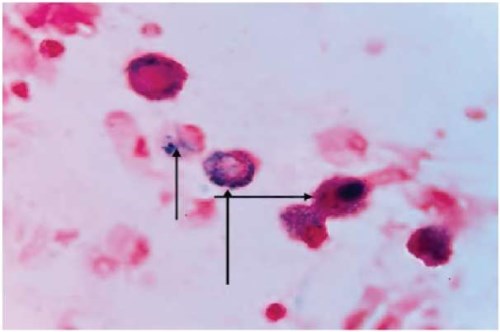
Idiopathic pulmonary hemosiderosis (IPH) is an orphan interstitial vascular lung disease that primarily affects children. The condition is characterized by a classic triad of symptoms: anemia, hemoptysis, and pulmonary consolidation visible on chest radiography and computed tomography.
Objective. To analyze the clinical and diagnostic features and therapeutic strategy for treatment-refractory IPH in a young child based on a detailed review of the fatal case.
Materials and methods. A clinical case of a 1‑year‑10‑monthold patient with confirmed IPH is presented, including the stages of treatment in the pulmonology department and the intensive care unit. The diagnosis was established based on a combination of progressive respiratory failure, characteristic findings on chest computed tomography, and the presence of a pathognomonic cytological sign, i. e., siderophages in bronchoalveolar lavage fluid, and following exclusion of Heiner’s syndrome and other causes of pulmonary hemosiderosis. The selected therapy included respiratory support and immunosuppressive treatment.
Results. The case demonstrated progressive disease refractory to combined immunosuppressive therapy. Despite comprehensive treatment, the patient developed life-threatening complications (severe acute respiratory distress syndrome, air leak syndrome, and multiple organ failure), which led to a fatal outcome.
Conclusion. The presented case illustrates an extremely unfavorable course of IPH in young children, underscoring the need for early diagnosis, readiness for immediate initiation of intensive therapy, and the search for new effective treatment protocols for severe forms of IPH.
Recurrent pancreatitis in patients with cystic fibrosis (CF) can develop in the presence of mild pathogenic variants of the CFTR gene. In this article, we report a clinical case of a 6‑year-old child with recurrent pancreatitis in the setting of CF with the F508del/ 3849+10kbC>T. A pronounced positive dynamics after the CFTR modulator therapy with elexacaftor + tezacaftor + ivacaftor + ivacaftor was observed. Following the onset of therapy, the child demonstrated an improvement in appetite, the disappearance of abdominal pain, and normalization of blood amylase and lipase levels. Targeted CFTR modulator therapy that restores the defective protein function is effective not only for pulmonary manifestations of the disease, but also in relation to pancreatitis in the case of mild CF phenotype.
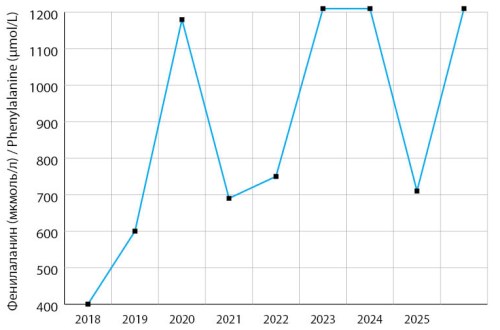
Phenylketonuria (PKU) or hyperphenylalaninemia (HPA) is a metabolic disorder caused by a deficiency in the phenylalanine hydroxylase (PAH) enzyme, resulting in the accumulation of phenylalanine (PA) and its metabolic products in the body. Early detection of PKU is achieved through universal neonatal screening of newborns. This enables timely initiation of adequate dietary therapy and contributes to a favorable prognosis. In this article, we present a clinical case of a late diagnosis of the classic form of PKU. The patient was monitored longitudinally from birth until the age of 17 years. A distinctive feature of this case is the diagnosis of phenylketonuria at the age of 2 years. The neonatal period was complicated by perinatal hypoxic-ischemic CNS injury, atelectatic pneumonia, and enteropathic syndrome. These pathological conditions accounted for the early delay in motor and speech development before the child reached 2 years of age. Prior to diagnosis, the child received age-appropriate levels of dietary protein, which played a major role in the development of persistent speech and language impairments and cognitive deficits. Strict dietary therapy initiated after confirmation of the PKU diagnosis resulted in partial compensation of these impairments; however, the early cognitive consequences proved irreversible. Insufficient adherence to treatment subsequently led to the development of episodes of metabolic decompensation. Concomitant somatic pathology, however, did not have a decisive impact on the course of PKU.
LITERATURE REVIEW
This literature review presents the latest data on methods for prevention and treatment of antibiotic-associated diarrhea caused by Clostridioides difficile. The effectiveness of etiotropic therapies and probiotics, as well as biological and immunotherapeutic approaches, is shown. The potential of fecal microbiota transplantation as a modern treatment strategy is also discussed. Special attention is given to the dietary management of antibiotic-associated diarrhea. Additionally, various surgical options are outlined for cases where conservative methods prove ineffective.
The Rett syndrome (RTT, RS, MIM #312750) is a severe progressive hereditary disease that leads to impaired development of the nervous system. This disorder, affecting primarily girls, remains one of the most common genetic causes of severe mental retardation in female patients. For decades, the management of RS patients has been largely limited to palliative and multidisciplinary care aimed at alleviating the most severe clinical signs threatening the quality of life. These strategies, however, do not target the pathogenetic mechanisms of the disease, thus failing to slow the progression of neurological symptoms and modify the RS course. This underscores the importance of creating disease-modifying therapeutic approaches. The present systematic review analyzes current international trends in the development and registration of medicines for RS treatment, along with the data on the existing disease-modifying drugs and those currently undergoing clinical studies. Such medicines form a new paradigm in the management of RS patients.
Available foreign and Russian literature underscores the importance of progesterone use for the prolongation and maintenance of pregnancy. However, the number of publications addressing its influence on congenital fetal abnormalities is scarce and the findings remain contradictory. Experimental animal studies have demonstrated the potential impact of progesterone on brain development. The use of progesterone in pregnant women is associated with lower indicators of respiratory distress syndrome, sepsis, pneumonia, retinopathy, and the need for artificial lung ventilation in newborns compared with the general population. The inconsistency and limited availability of reliable data on the health status of newborns following pregnancy prolongation with progesterone therapy, as well as on their adaptive capacity in the early neonatal period, highlight the relevance of this topic and the need for further research into the effects of progesterone therapy on human offspring.

ISSN 3033-6783 (Online)